Last updated: November 2026. General information, not medical advice. Persistent redness should be assessed by a doctor; rosacea has several subtypes and treatments differ.
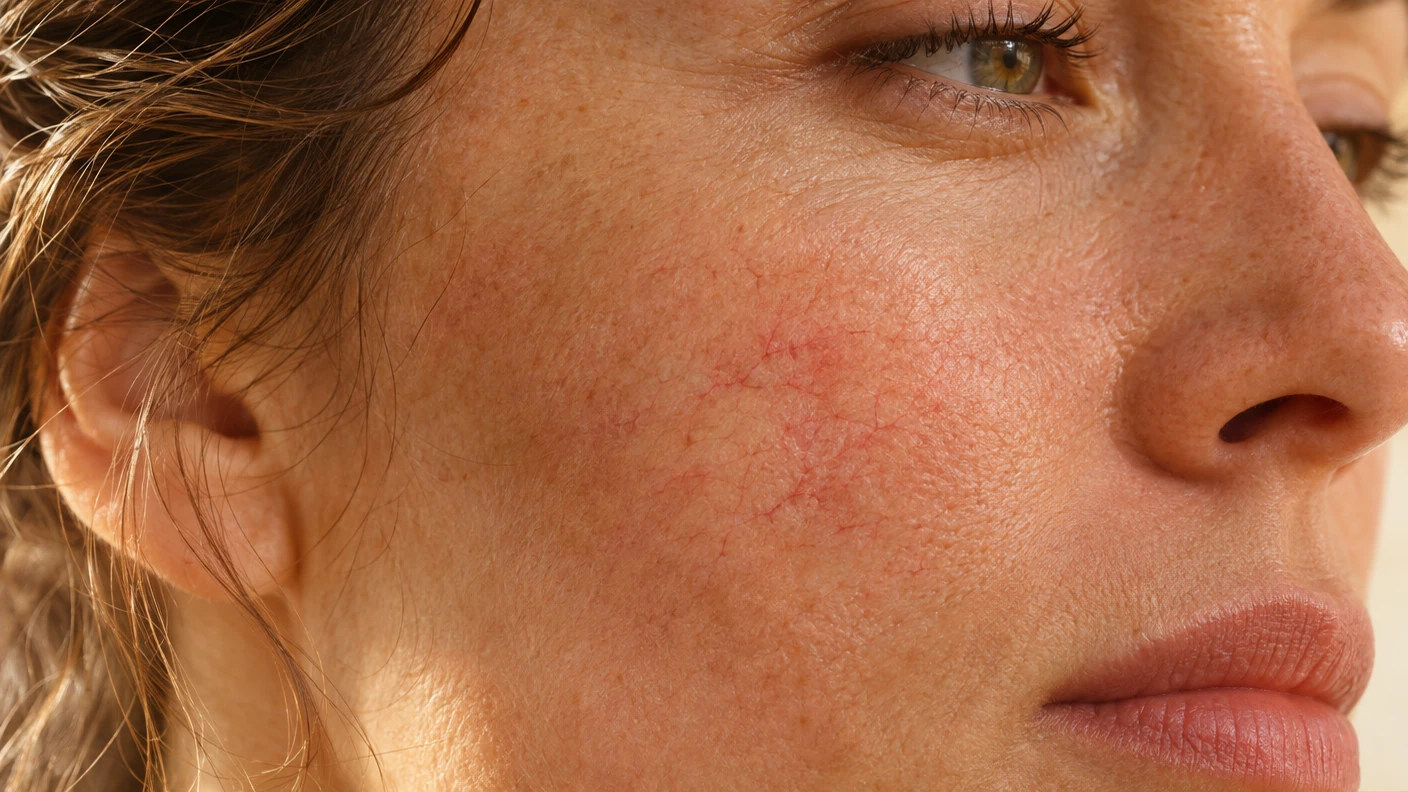
“Red face” covers at least three different problems: rosacea, broken capillaries and a damaged skin barrier. They look alike in a mirror and are treated differently. Laser is excellent for one of them, useful for another and harmful for the third.
On this page
Three problems behind a red face
Swipe to see all columns →
| Problem | Looks like | First step |
|---|---|---|
| Rosacea | Flushing, papules, sometimes eye symptoms | Trigger control, topical or oral treatment |
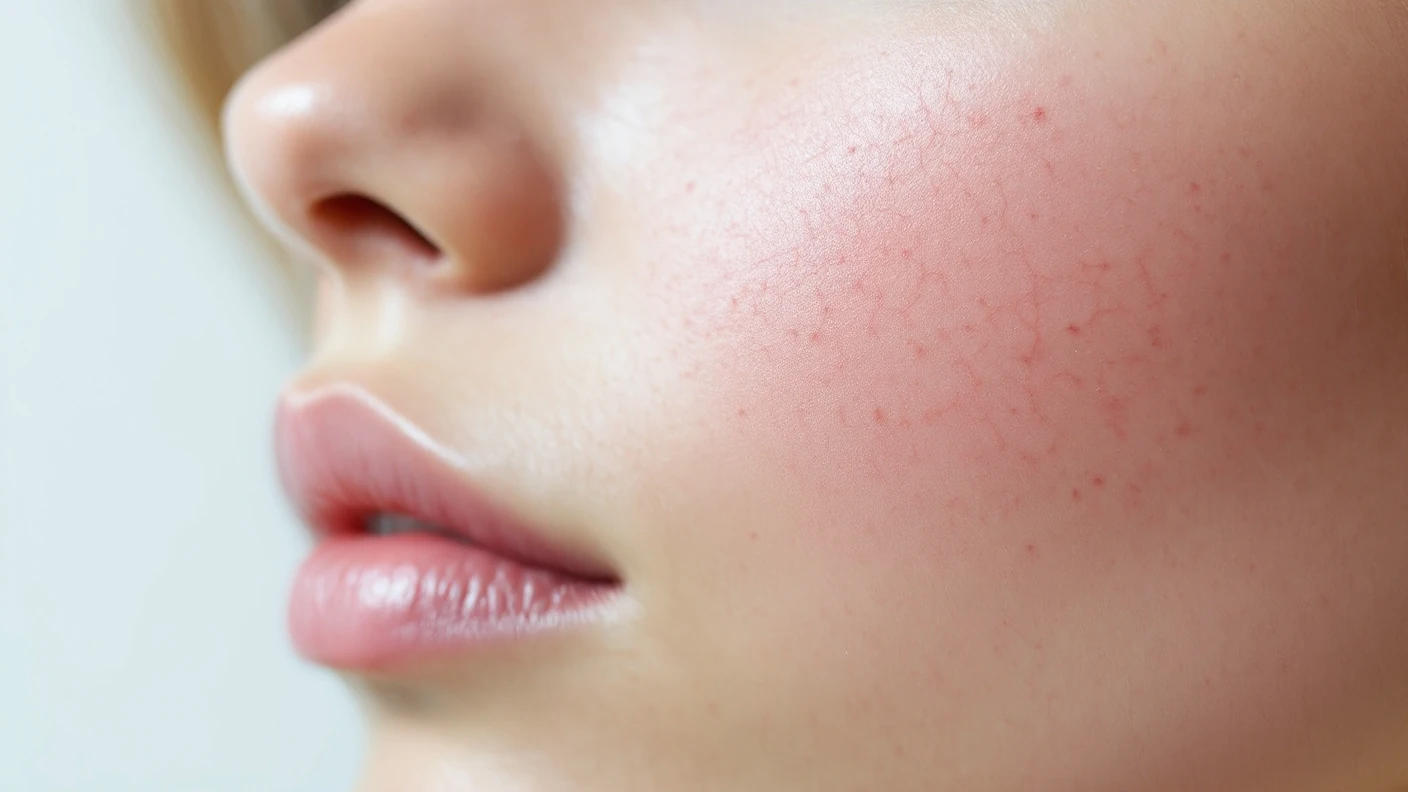
| Thread veins | Fine red or purple lines, usually on cheeks and nose | Pulsed dye laser or IPL |
| Barrier damage | Redness, stinging, tightness after products | Stop actives, restore barrier |
Rosacea: what helps first
- Triggers — sun, heat, alcohol, spicy food and stress are the usual four;
- Topicals — metronidazole, azelaic acid, ivermectin for papules;
- Oral treatment — antibiotics or isotretinoin for stubborn cases, prescribed;
- Gentle skincare — no scrubs, no strong acids during flares.
Thread veins: the right device
Broken capillaries respond to light: pulsed dye laser (595 nm) is the reference, IPL is a cheaper alternative with more variability. Both work by heating the vessel until it closes. Two to five sessions are typical, and new veins can appear over time.
Sclerotherapy is for leg veins, not facial capillaries. If a clinic offers it for cheeks, ask why.
When the barrier is the problem
Over-exfoliation, harsh cleansers and too many actives produce redness that looks like rosacea but improves when you stop everything except a bland moisturiser and SPF for two to four weeks. Treating that skin with laser makes it worse.

Expert note
“Half the red faces I see are not rosacea at all — they are a barrier damaged by too many acids. The treatment is subtraction, not another laser.”
Dr. Karim Haddad
Dermatologist, laser medicine
Questions people ask
Can laser cure rosacea?
No. It reduces visible vessels and redness; the underlying tendency remains and needs management.
Do thread veins come back?
New ones can form, especially with sun exposure and rosacea. Maintenance sessions are common.
Is IPL as good as pulsed dye laser?
For fine redness, IPL can work well. For distinct vessels, pulsed dye laser is usually more precise.
What about eye rosacea?
Grittiness, burning and recurring styes can be ocular rosacea and need medical treatment, not cosmetics.
Sources
Where RF fits and where it does not.
Read the RF laser guide